
We fix what's costing your restaurant
money, time, and control.
Menu margin leaks. Delivery bleed. Missed calls during service. Private dining running at 30% of its potential.
Eight platforms, zero visibility. An owner who is still the system.
We find these leaks. Then we fix them.
Most restaurants aren't broken in one place. They leak in six.
The issue is rarely just marketing. Or just labor. Or just the website.
It's the combination — small weak points across the business that quietly cost money every week.
01 / MARGIN IS WEAK EVEN WHEN REVENUE IS STRONG
Menu pricing, delivery commissions, discounting, channel mix. Profit disappears before it hits the bank.
03 / MARKETING IS HAPPENING AND NOT PRODUCING.
Wrong message. Weak offers. No retention strategy. Email, SMS, reviews, and social running without a system behind them.
05 / THE OWNER IS STILL THE GLUE.
Decision-maker. Problem-solver. Human dashboard.
Default escalation point.
Not scalable.
02 / DEMAND EXISTS. TOO MUCH GOES UNCAPTURED.
Missed calls during service. Weak booking flow. No private dining engine. No-show leakage. Slow inquiry follow-up.
04 / TOO MUCH STILL DEPENDS ON SOMEONE CATCHING IT MANUALLY.
During service. After hours. Across the week. Lives in someone's memory instead of a system.
06 / NOBODY CAN SEE THE BUSINESS CLEARLY.
Too many platforms. Too many tabs. Not enough real visibility.
There's a seventh leak nobody talks about.
You.
The owner bottleneck is the real problem.
You're the POS person. The host. The manager. The problem-solver.
The decision-maker. Everything flows through you.
Which means every decision waits for you. Every system needs your attention. Every problem pulls you away from strategy. You're operating at capacity — you can't grow without breaking.
This is why most independent restaurants plateau at $1M–$1.5M.
Not because they aren't good. Because the owner can't scale themselves.
The restaurants that break through do one thing differently.
They stop running on the owner and start running on systems.
That's what we build.
We go in and look at the restaurant commercially and operationally. Menu and margin. Pricing and offers. Website and conversion. Private dining and events. Guest communication. Calls and inquiries. Delivery economics. Retention. Reporting. Where the owner is still carrying too much. Where AI and automation should be taking pressure off.
Then we fix what matters most — in the right order.
We don't sell random services. We fix the restaurant.
REVENUE
Menu, pricing, channel profitability, private dining, events, retention, repeat traffic, conversion.
OPERATIONS
Calls, bookings, follow-up, staff drag, workflows, handoffs, manual gaps, team dependence.
VISIBILITY
Reporting, alerts, dashboards, AI briefings, performance clarity, decision support.
Every restaurant is different. Every engagement is scoped to what the specific restaurant actually needs.
How we work
The Restaurant Score™
A fast diagnostic that shows where the restaurant is leaking money, missing opportunities, and relying too heavily on manual effort.
We look at revenue leaks, menu and margin, guest flow and inquiry handling, marketing and retention gaps, system disconnects, and where AI or automation could take weight off.
You leave with your two biggest weak points, what to fix first, where the money is hiding, and the clearest next move.
Free for qualified restaurants.
Restaurant OS™
Once the restaurant is cleaner, Restaurant OS is the layer that helps you actually see it. Instead of chasing numbers across platforms and managers and guesswork, you get one place to look and one rhythm for reviewing it.
Every morning at 7am, your business is waiting for you. Revenue. Costs. Alerts. Reviews. Staff. Pipeline. You make decisions. You chase nothing.
Included every month.
Live dashboard connecting Square or Toast, Resy or OpenTable, Google Business, 7shifts, DoorDash, Uber Eats, and Instagram.
Daily AI briefing in plain English — what happened, what's at risk, what to do first.
AI-drafted review responses ready to approve.
Labor, bookings, reviews, revenue, and private dining pipeline visibility.
Alert system for anything moving the wrong direction.
Monthly strategy call.
Ongoing refinements.
The Build™ — customized to your restaurant.
Some restaurants need revenue recovery first. Some need the owner out of the phone. Some need private dining rebuilt as a real revenue channel. Some need the whole thing looked at end-to-end.
The scope comes out of The Restaurant Score™ and the call that follows. We build around the actual problem — not a packaged solution.
Depending on what's off, a Build can include any combination of the following.
REVENUE Menu and margin analysis, repricing and repositioning. Delivery platform profitability — kept, renegotiated, or cut. Private dining and events funnel — page, inquiry flow, follow-up, deposit, conversion. Repeat guest and reactivation engine — email, SMS, CRM. Website and conversion rewrite. Review-to-return logic.
OPERATIONS AI receptionist and missed-call text-back. Inquiry routing and automated follow-up. Guest communication automation. Reservation confirmation and reminder sequences — no-show reduction. Review monitoring and response workflow. SOP and workflow cleanup. Staff scheduling against real demand data.
VISIBILITY Restaurant OS dashboard setup. Daily AI briefings. Operational alerts. Labor, bookings, reviews, and revenue visibility in one place. Private dining and inquiry pipeline visibility. Monthly strategy rhythm.
Every Build ends the same way. Automated. Installed. Running. Not handed to you as a recommendation.
The call you missed during Saturday rush just booked somewhere else.
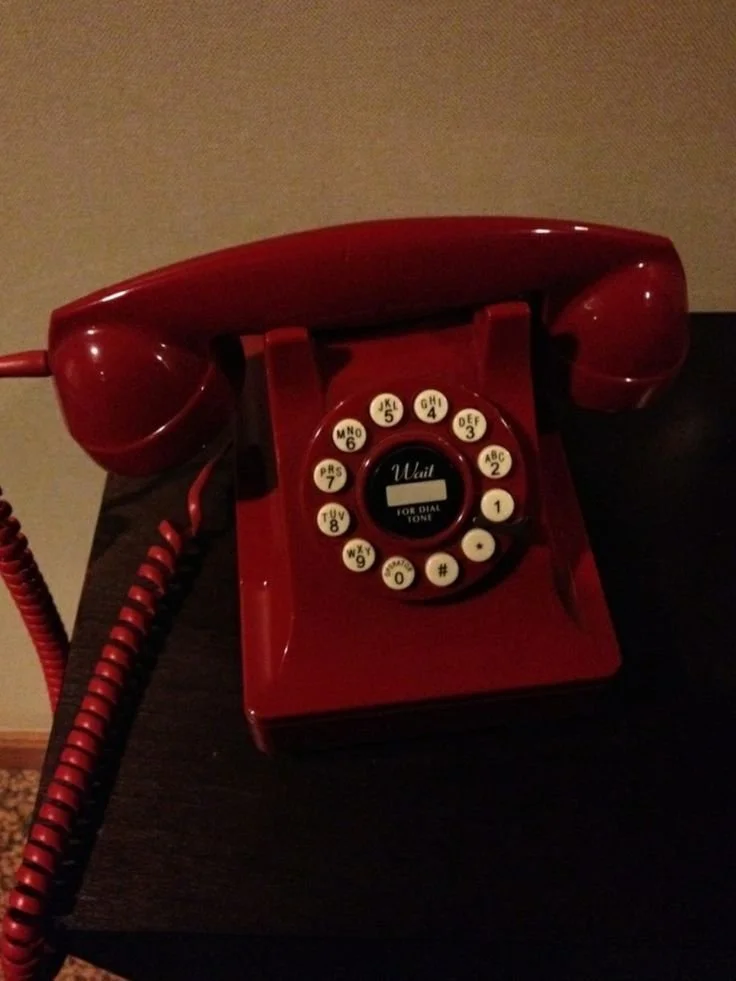
Most independent restaurants have no one answering the phone during service. The host is seating. The manager is on the floor. The owner is in the kitchen. The phone rings out. The reservation goes somewhere else.
We fix that.
Every Restaurant OS client gets the option of a fully configured AI receptionist — trained specifically on your restaurant. It answers calls 24 hours a day. It books reservations. It answers questions about the menu, hours, and private dining. It takes messages and flags urgent calls immediately.
It sounds like your team. It knows your restaurant. It never misses a call.
This is not a generic answering service. It is a custom-built voice system trained on your specific operation — your menu, your hours, your policies, your tone.
Add-on: available to all Restaurant OS clients. Configured in one week.
Live in two weeks.
You do nothing.
STEP 1: DISCOVERY CALL (30 MIN)
We look at your operation — revenue, margin, bookings, delivery mix, where the owner is still carrying too much. We identify which leaks are costing you most. We confirm fit. No pitch. No deck. Just clear numbers.
Timeline: Same week.
STEP 2: THE BUILD
(10-14 BUSINESS DAYS)
We scope exactly what needs fixing — menu, private dining, automations, AI receptionist, Restaurant OS, or any combination. We build it. We install it. You don't touch anything.
STEP 3: GO LIVE
Everything we built is running. Automated. Installed. No longer dependent on you being in the room.
The numbers nobody
shows you.
70% Of first-time diners never come back. They didn't hate it. You just didn't stay top of mind. Repeat guests drive 60–65% of restaurant revenue — the ones you're losing are the ones you can't afford to lose.
Up to 40% What delivery platforms actually cost you after commission, processing, packaging, and paid visibility add-ons. Operators see 15–30% on the invoice and assume that's the full picture. It isn't. You're working for DoorDash, not yourself.
3–5% Average net profit margin for a full-service restaurant. At that margin, every $1,000 in wasted labor, mispriced item, or lost reservation wipes out $20,000 in revenue. There is no room for operating blind.
73% Annual staff turnover in hospitality. Replacing one hourly employee runs around $2,300. Managers $10,500+. GMs $16,700+. Most operators don't track this line item. It's one of the biggest.
50% Of independent restaurants close within five years. The ones that don't make it aren't usually bad restaurants. They're restaurants where nobody was watching the right numbers.
Menu Margin Loss What restaurants lose by pushing the wrong dishes $8,000–$15,000/year What our clients gain through menu optimization Improved margin 4%, faster kitchen service, higher revenue per cover
Everything can be customized.
Some restaurants need revenue recovery first. Some need private dining. Some need automation. Some need reporting and a better operating layer. Some need the whole thing rebuilt.
We scope around the real problem, the size of the operation, and the fastest path to return.
You do not need to know what fits before reaching out. That's our job.
"I hired consultants before. They gave me decks. The Fifth Floor gave me a rebuilt booking flow, five automated sequences, and a private dining page that now drives six figures in new annual revenue. Different category entirely."
— Fabio M., Restaurant Owner
If the restaurant is making money and still feels heavier than it should, something is off.
We'll help you find it. Then we'll help you fix it.